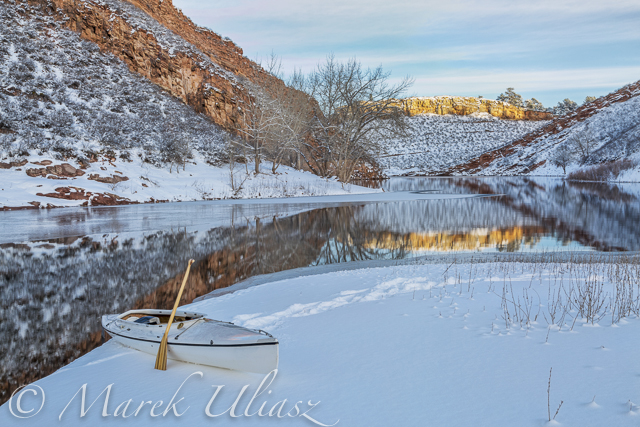
In a typical winter all lakes in northern Colorado are frozen, so I am paddling on the South Platte River. However, this winter I have not been on the river yet. All time I am paddling Sea Wind canoe on the Horsetooth Reservoir just west of Fort Collins. I didn’t paddle in January when the lake was partially frozen and there was no good access to open water.
The ice on Horsetooth is usually starting from its southern end. So, if the South Bay is covered by ice it my be still possible to launch in the north at Satanka Cove from a boat ramp or rocky tip next to the Horsetooth Dam. Sunrise Area on the eastern side would be perfect for winter launching, but is closed for a cold season. You would have to use a cart to transport boats from a parking lot down to the water or execute a pretty long portage.
Pictures below cover all my paddling from late November 2014 till late February 2015.
November 27, 2014 – Eltuck CoveDecember 9, 2014: A quiet evening near Inlet Bay.December 20, 2014 – Exploring Inlet Bay and Hansen Feeder Canal supporting water to Horsetooth Reservoir from the Colorado River through the Big Thompson Project (map)December 27, 2014 – Quarry Cove in winter scenery, my last paddling in 2014.February 4, 2015: Quarry Cove, a month later. My first paddling in 2015.February 13, 2015. Eltuck Cove. Testing a new remote control for my Canon camera – CamRanger with iPod touch.February 13, 2015: Sunset over Horsetooth Dam seen from the ELtuck Cove. Springtime weather.February 16, 2015: Back to winter weather. It was snowing. Old sandstone quarry in Satanka Cove.February 18. 2015: Quarry Cove. Some serious multitasking: paddling canoe, flying a drone and shooting selfie.
Confluence of two Grizzly Creeks 10 miles SW of Walden, CO – the beginning of the North Platte River
North Platte River is one of my favorite paddling destinations. Usually, I paddle various flatwater river sections in Wyoming above and below Saratoga. However, there is a 45 mile long river stretch in Colorado’s North Park before the North Platte enters the Northgate Canyon.
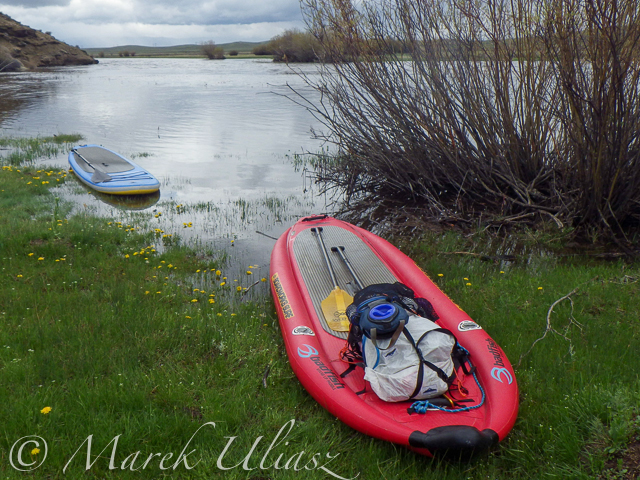
After some fall and winter scouting and a lot of time spent on Google maps, the exploration of the upper North Platte River finally took place during the Memorial Day weekend. Rob Bean joined me to paddle our inflatable Bordwarks SUPs: Shubu and Badfish.
Upper North Platte River on Google maps with some waypoints for access points and diversion dams.
14 miles of the upper North Platte River near Walden with the river beginning as a confluence of Grizzly Creek and Little Grizzly Creek
May 24, 2014 Put-in: Grizzly Creek at highway 14, 10 miles south of Walden (not much room for off road parking) Take-off: Co road 12 W, 8 miles west of Walden (official fishing access, parking near bridge, another fishing access with parking ~0.5 mile below the bridge).
GPS milege: 13.8 miles, time: 2:50 hours.
31 miles of the North Platte River from Walden to the Northgate Canyon put-in
May 25, 2014 Put-in: Co road 12 W Take-off: put-in for the Northgate Canyon run, 9 miles north of Cowdrey
Alternative put-in for a short 6 miles run: Co Rd 6, 2 miles west of Cowdrey (that run is described in Paddling Colorado book by Dunbar Hardy).
GPS milege: 31 miles, time: 6:49 hours.
River flow was rising from 3000 to 4000 cfs at Northgate during our two days of paddling. A lot of meadows in the river valley were flooded. Paddling speed: up to 9 mph.
The weather was challenging. We had a lot of thunderstorms around us during the first day followed by ~8 hours of heavy rain. We were lucky to finished our paddling before the rain. A beautiful weather on second day lasted till noon, then we experienced a storm with a small hail followed by heavy rain for the rest of the day. Strong afternoon headwinds put us on our knees, especially, during the second day.
Obstacles: diversion dams, fences across the river, low bridges depending a water level. No trees. No rapids (except dams). The river is wide and open, so you can see or hear all incoming obstacles well in advance. We never run into any troubles.
Most of the dams can be seen on satellite pictures. The dam a few miles below Co road 12 W is pretty big and always requires portaging (not comfortable on right). Other dams are primitive rock dams and often can be run. We portaged most of them to avoid big waves, but I would run more of them in a canoe. We managed to paddle around a few of them. It is easier to select a correct river arm on a map than in practice on the river.
We had to portage numerous barbed wire fences crossing the river. Some were in water and could be safely run over in a canoe, but we played safe in out inflatable SUPs. A few fences had only a single wire across the river and was possible to paddle under them. Always watch for these fences! You can notice stronger and taller posts on the shores and, sometimes, stairs over them, before seeing the actual wires over the river.
One or two low farm bridges in the upper section required portaging. All bridges in the lower section have a high clearance.
Wildlife: moose, bighorn, deer, elk (a herd was swimming across the river several times just in front of us), bald and gold eagles, pelicans, geese and other waterfowl, numerous smaller birds, curious cows.
Scenery: a wide valley surrounded by snowy mountains, crazy river meanders in the upper section, cliffs and rock outcroppings, just a few trees (often with eagle nest), higher hills with some forest in the lower section, a lot of water flowing around and flooding meadows, but, usually, not difficult to find a dry place to land.
Grizzly Creek looking upstream from highway 14Grizzly Creek looking downstream from highway 14 – start of our adventureNorth Platte River meandering near WaldenOne of high cliffsGoing over a low farm bridgeOne of diversion damsNorth Platte River at Co Rd 12 W near Walden – the finish of day 1 and the start of day 2Barbed wire fence across the riverAnother fence across the riverAnd another cattle fence to portageLunch break – last minutes of nice weatherHail storm over diversion damThe last river section between Cowdrey and NorthgateFinishing in rain at the NorthgateThe last look at the river – still rainingReady to go home …
All pictures were shot with my current paddling camera on duty – Pentax Optio WG-2. I have been using waterproof Pentax Optio cameras for paddling and other outdoor activities since their first original model was released in 2005. The newest model from that series is available now as Ricoh WG-4.
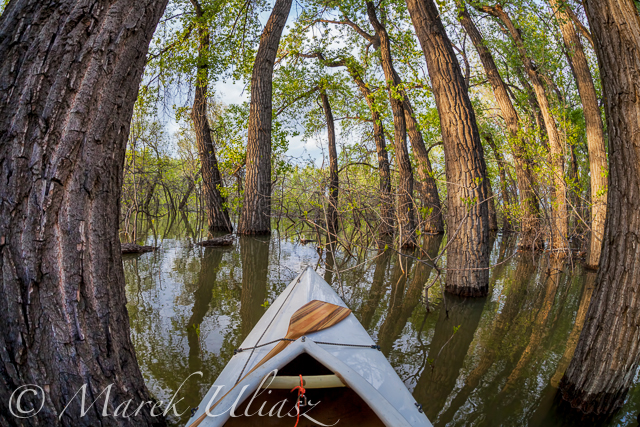
Fish eye lens perspective when paddling through a submerged forest
I love to paddle the Lonetree Reservoir southwest of Loveland during springtime. You can always enjoy a nice view of Rocky Mountains Front Range. It is a great spot to shoot sunsets over mountains. When water is high I like to paddle through submerged trees and bushes. Please keep in mind that the heron rookery is a restricted area during the nesting season, but there are other places where you can paddle into a forest.
Picture featuring Sea Wind canoe in cottonwood forest was shot on May 15m 2014 with Canon 5D Mark II camera and Sigma 15 mm Fisheye lens. I confess … I spent a longer while gliding in a canoe between cottonwood tress and playing with that lens. I was shooting in both landscape and portrait formats.
Which version do you prefer? Horizontal or vertical?
This little photo story was originally posted in my old paddling blog on April 14, 2007.
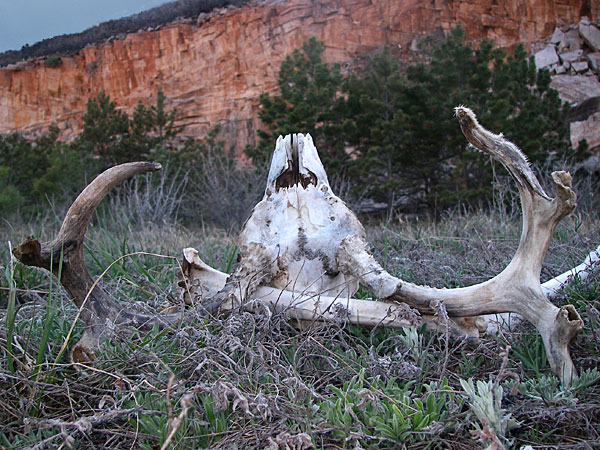
A deer skull on the shore of Horsetooth Reservoir
I had an unusual photo stop when paddling my Thunderbolt kayak on the Horsetooth Reservoir this afternoon. Somewhere on the west shore near Quarry Cove I found a deer skeleton. I spent more than half an hour photographing it. Now, I understand better Goergia O’Keeffe’s fascination with animal skulls which she used to collect and paint when living in New Mexico.
All pictures were shot as usual with Pentax Optio W10, but I would really love to have there my DSLR camera with a tripod.
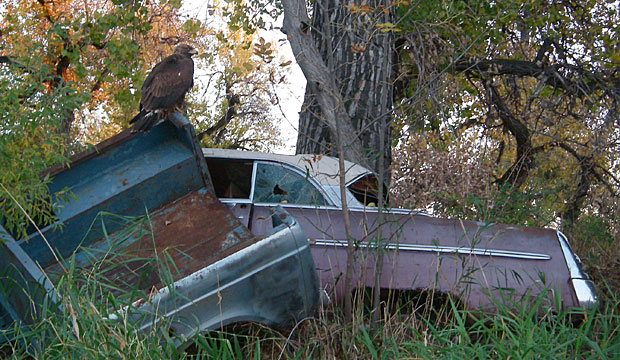
I was looking at paintings by Nancy Rynes, a Colorado artist. I like her texture series and, especially, the picture called “Confluence”. Two red hawks sitting on a wall covered by graffiti. For me the confluence means here the coming together of wildlife and man made objects. It reminds me an old story from the South Platte River paddling – encounter of a young eagle sitting on old trashed car.
I really hated those cars from 1950s and 1960s when I started to paddle the South Platte River years ago. Then, having no choice, I accepted them and started to photograph them. At least they were put into the river for a reason – to protect river banks. It seems that wildlife is accepting them too.
October 15 was my first day on the South Platte River in the fall/winter paddling season of 2007. I paddled upstream from Kersey in the Thunderbolt kayak. After exploring the Lone Tree Creek I paddled back down river to Kersey. It was just before sunset when I decided to shoot some pictures of old cars dumped there to protect river banks.
I squeezed my kayak into some standing backwater and started shooting. I didn’t notice anything unusual, but I did sense somebody’s presence …
Not farther from me than a length of my kayak there was an old truck and a young eagle was sitting on the top of it. I kept shooting my pictures. However, looking at a beak and powerful talons, I didn’t feel very comfortable balancing my tippy kayak in the front of that chick. Judging from the time stamps in my pictures I spent 12 minutes there. During that time the eaglet did not make the slightest movement.
I wished I had a better camera than my Pentax Optio W10. It was getting dark, so I backed up leaving the eagle on his truck.
I have seen adult bald eagles many times during my paddling on the South Platte, but it was the closest and most exciting encounter. As a first guess I assumed that I saw a juvenile bald eagle. After searching internet it seems that it is quite difficult to distinguish between immature bald and golden eagles. Some comments I got indicate that it was the golden eagle. So, who is that chick?
Bald eagles commonly nested in and around Rocky Mountain National Park as late as the 1950s (117). By 1974, just one pair remained in the state (93). The population remained perilously low through the 1970s and 1980s, began growing in 1986 and reached a peak of approximately 65 pairs in 2006 (2, 69, 93, 96). One-third of Colorado’s nesting bald eagles occur east of the Continental Divide in the South Platte River watershed (115). Other breeding concentrations include the Yampa River upstream of Craig, the White River in the vicinity of Meeker, the Colorado River upstream of Kremmling, and La Plata and Montezuma counties.
I paddled the South Platte River twice this year in the upstream/downstream mode covering just a couple of miles above Kersey on January 21 and above Kuner on February 16.
The river is the same as before 2013 flooding, wide open, without any unusual obstacles. More changes you can see on shores including river access.
Evans. Riverside Park, a popular launching place, is closed. I am not sure if it is related to the flooding or just temporary closure due to winter/muddy conditions. No information on their website.
37th street bridge in Evans (left shore, upstream) may be an alternative launching spot with off road parking. It is just below the Riverside Park. Right now, the place is very muddy with a lot of fresh dirt after the bridge repairs. SWA below the bridge is closed.
Kersey access remains the same (not too easy for larger groups).
Kuner access remains the same.
The river flow is good, above 1000cfs, all the way to Fort Morgan. Most dams below Kuner were upgraded with gates during recent years. They may be paddleable if not diverting water. The dam below Kuner (Empire Reservoir inlet) was closed yesterday.
Only a little bit of snow was left on sandbars. Turkey were very talkative and loud. I saw a whitetail deer crossing the river – it had to swim across the main channel.
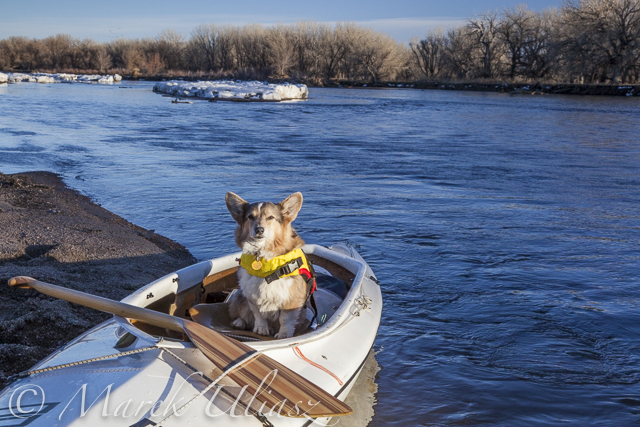
Pixel, the “water” Corgi in Sea Wind canoeSouth Platte River above Kuner, February 2014South Platte River above Kuner, February 2014South Platte River above Kuner, February 2014
in Evans remains closed until further notice due to damage from 2013 floods.
I did some driving and scouting along the S Platte River today:
1. Brighton. Veterans Park, Bike trail is closed, but parking is open and it’s possible to access the river as usual if you ignore “trail closed” sign. There is a disturbing warning sign about bacteria pollution in the water.
2. Ft Lupton. Pearson Park. Open. River Access as usual.
3. Hwy 60 bridge near Milliken. The same uncomfortable access as before flooding.
4. Evans. I didn’t check Riverside Park again which was closed a week ago.
There is a reasonable access under the hwy 85 bridge from a quiet frontage road (right side of hwy 85 when driving towards Denver, you need to turn at last traffic lights before the river, 42nd st).
That road (W Service rd on maps) goes to the dead end at the bridge and continues as a bike trail under the bridge to Riverside Park. Less than 200 yards to water. Some parking space there and along the road. Enough space for boat preparation, but only a narrow sandy spot under the bridge for launching – one boat at a time. Otherwise, the shore is pretty high. The place doesn’t look so bad considering “under the bridge” scenery.
If you have a boat on a cart you can walk further downriver along the bike trail to look for another launching place (all the way to Riverside Park), but you will see probably that familiar steep shore with concrete blocks like in the Park.
January 21, 2014. Finally, I started my paddling season for the year 2014. I took the Sea Wind canoe to Kersey and paddled upstream to the confluence with the Poudre River and back. It was my first paddling on the South Platte after last year flooding. There are a lot of signs of that flooding on shores, but the river remains the same – wide open without any new obstacles.
The river flow was ~950cfs at Kersey. There is a new station near Greeley – PLAGRECO. I don’t know its exact location yet, but it may be pretty useful for planning paddling trips since it shows the river flow not affected by subtraction and addition of water between Greeley and Kersey (2 diversion dams and the Poudre River).
I will be doing more training runs at different locations on the South Platte during winter time if anybody would like to join me. Most of the time I will paddle the Sea Wind canoe which is my first choice boat for this year Missouri River 340 race. I am hoping also for some downriver SUP runs. You can expect updates to my South Platte River guide.
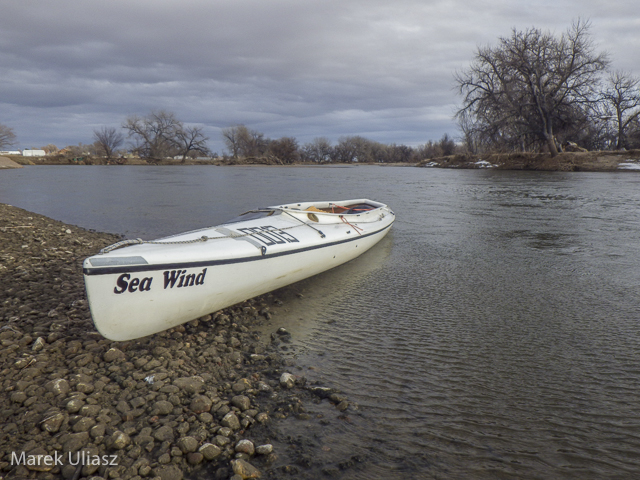
paddling upstream the South Platte River above Kersey, ColoradoSea Wind canoe on the South Platte Riverlooking downstream the South Platte Riverlaunching/landing spot on the downstream side of Kersey bridge
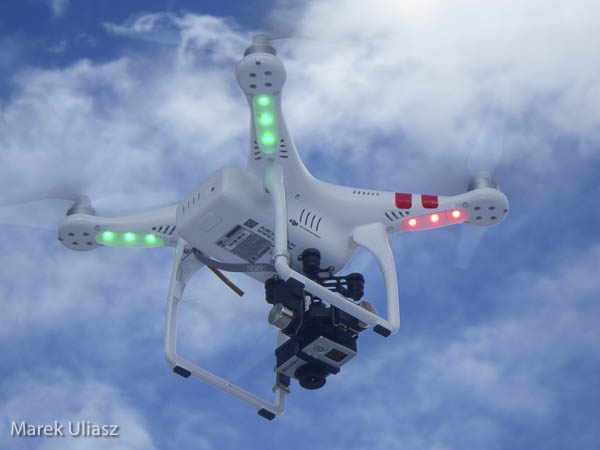
UFO showed up over my backyard yesterday afternoon …it landed …abducted my GoPro camera …and, flew away,disappearing in clouds. Well, almost …Will it return back?
North Platte River is one of my favorite paddling destinations. Usually, I paddle various flatwater river sections in Wyoming, but, recently, I scouted access points to the upper North Platte River in Colorado above Northgate Canyon.
That river section is mentioned as “Upper Valley” in Paddling Colorado book by Dunbar Hardy. It is just 6 miles starting from put-in on county road 6 west of Cowdrey and ends in the Routt launch site (put-in for the Northgate Canyon run). The river is meandering in a wide valley with some beaver swamps.
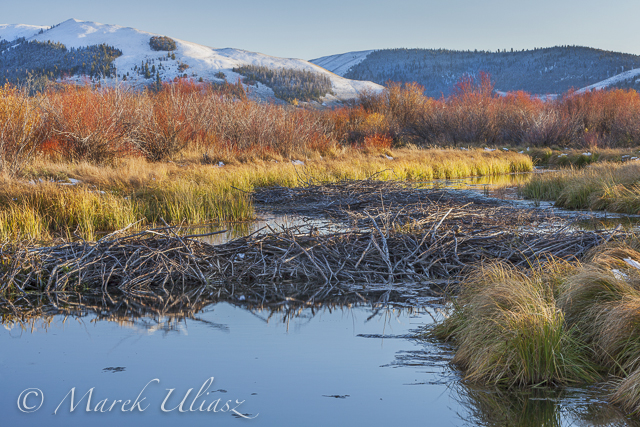
North Platte River above Northgate Canyon near Cowdrey, ColoradoNorth Platte River above Northgate Canyon near Cowdrey, ColoradoBeaver dam on the North Platte River above Northgate Canyon near Cowdrey, Colorado
I took these three pictures from the Routt launch site looking upstream on October 16, 2003 with the river flow about 250 cfs which is much higher than usual for autumn. Recommended flow for paddling is 500-1500 cfs. I believe that 250 cfs may be sufficient for downriver run, perhaps, with some occasional shallow spots. A packraft trip with a bike shuttle? A bike leg would include some hill climbing and would be longer than a river one.
I added North Platte River pictures to my stock photography portfolio. There are available for download and licensing as royalty free pictures starting from $2 for a small size perfect for blogging or web publication.